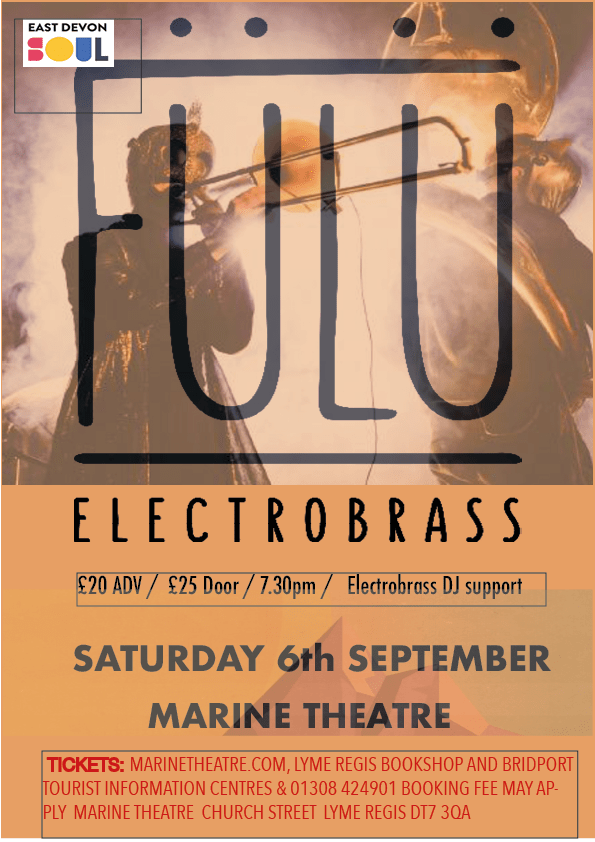
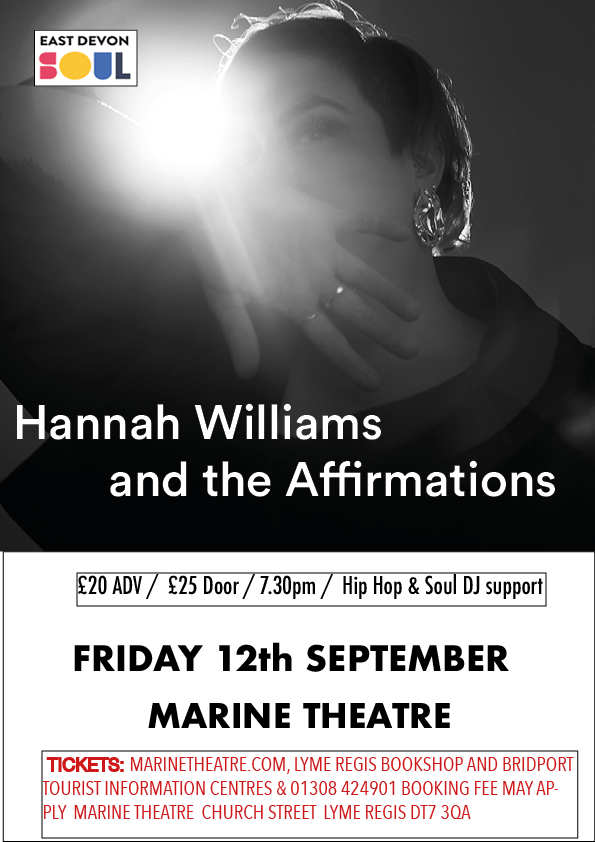
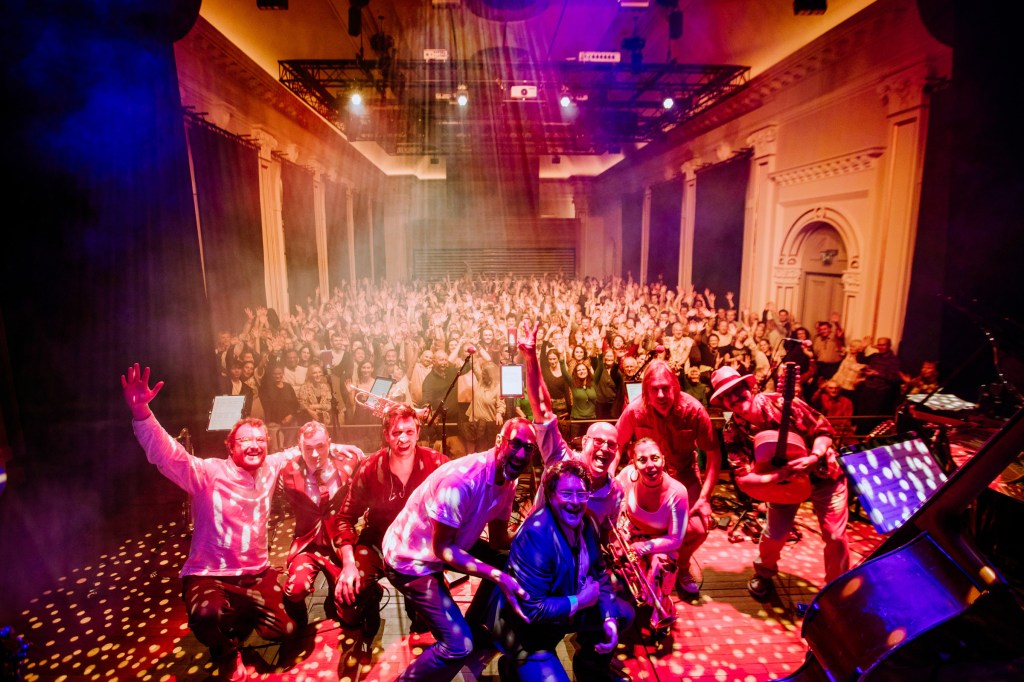
As the festival season comes into prominence, thoughts of milling about in fields listening to new sounds, seeing new sites and generally being humans together in one place comes into being. Looking ahead through the steamy (hopefully) months to September, a beautiful time of the year which also can feel slightly melancholic. Kids back to school, teachers back to school, nights starting to draw in. Whistful for Spring’s hopeful flavours. So what better way than to elongate the summer than partake in two gigs at the lush Marine Theatre in Lyme Regis. Fulu and Hannah Williams are two of my favourite live acts, artists breaking boundaries and exuding music innovation and brilliance. Two of the best gigs you will see this year. Each will be masked and unmasked. Mysterious and real. Guaranteed by East Devon Soul.
East Devon Soul Festival is a community music event with sustainability and revitalisation at its heart, bringing opportunities for local and national artists to perform in the seaside location of Seaton, East Devon, utilising available resources and infrastructures. The festival will feature multi genre eclectic music from local and national artists, crossing genre divides but all joined by the concept of soul, music that moves, has humanity and expression. All in collaboration with local venue owners and community groups.
Ethos
Seaton in East Devon is a town with multiple underused venues, a lack of activity but with the infrastructure to support a creative ecosystem. Sitting between the more vibrant towns of Lyme Regis and Sidmouth, Seaton has been left behind.
The aim of the East Devon Soul Festival is to bring music to the town to support socioeconomic enhancement, providing culture and economic life, encouraging people to come in and support local businesses. East Devon Soul Festival will generate an uplift in culture for the town, providing hope and opportunity for future events to occur and release the creative potential of the region, benefitting a wide demographic, including young people, families, older residents, and those who may otherwise have limited access to arts and live music due to financial, geographic, or social barriers.
East Devon Soul Festival will offer opportunities for local musicians and performers to showcase their talents, promote wellbeing through shared cultural experiences, and strengthen social connections in the community. Through collaborations with schools, local businesses, and community groups, East Devon Soul will also provide volunteering, training, and educational opportunities to encourage participation in event production and the wider creative industries.
Sustainability is a key driver for the East Devon Soul Festival. We want people to have a great time in a wonderful location whilst leaving as little carbon trace as possible. Underutilised venues will be opened up. For example, the iconic Seaton Tramway can be transformed into a beautiful 500 capacity venue. The Old Picturehouse Cinema becomes a hub for global funk music. The Hideaway Cafe at the far end of the promenade a venue for late revellers, with DJ’s spinning electronic House or Drum and Bass. The beach front Tide Cafe will have acts performing on its balcony.
Incentives will be provided to travel to the festival by green transport. The small gauge electric tram can ferry people in from campsites or Bed and Breakfasts of the nearby villages of Colyford or Colyton. Gas buses will be used to connect the nearest train station at Axminster with Seaton, a 20-minute journey. Electric tuk tuk’s will bring spice to East Devon life, a novel way of entering the festival from local villages. Arrival by bike and foot will be encouraged through elements of VIP access, food and accommodation discounts.
Line Up
The music ethos for the East Devon Soul Festival is quality eclectic and inclusive. Music for everyone but with a cohesive narrative, where bands featuring female and non-binary musicians are encouraged. Upcoming acts who will engage and educate audiences from across the spectrum, classical to electronic dance music, jazz, funk, soul and folk. East Devon Soul will have appeal for all ages and tastes. From jazz trios to surf rock, DnB and electronica the music is naturally eclectic, providing opportunities for local artists and showcases for acts brimming on the edge of stardom. The common denominator is that all acts will be approved by the East Devon Soul team, unleashing years of experience across the music industry to bring a festival for the local masses.
Some of the artists performing include Dr Meaker, The Egg, Kaya Fyah, The Guns of Navarone, the Rumble-O’s and Tomorrow’s Warriors rising stars.
Spinning tunes in pop up venues across Seaton will be top DJ’s including legendary DJ Krust, Queen Bee, Beatles Dub Club and the Allergies.
Seaton
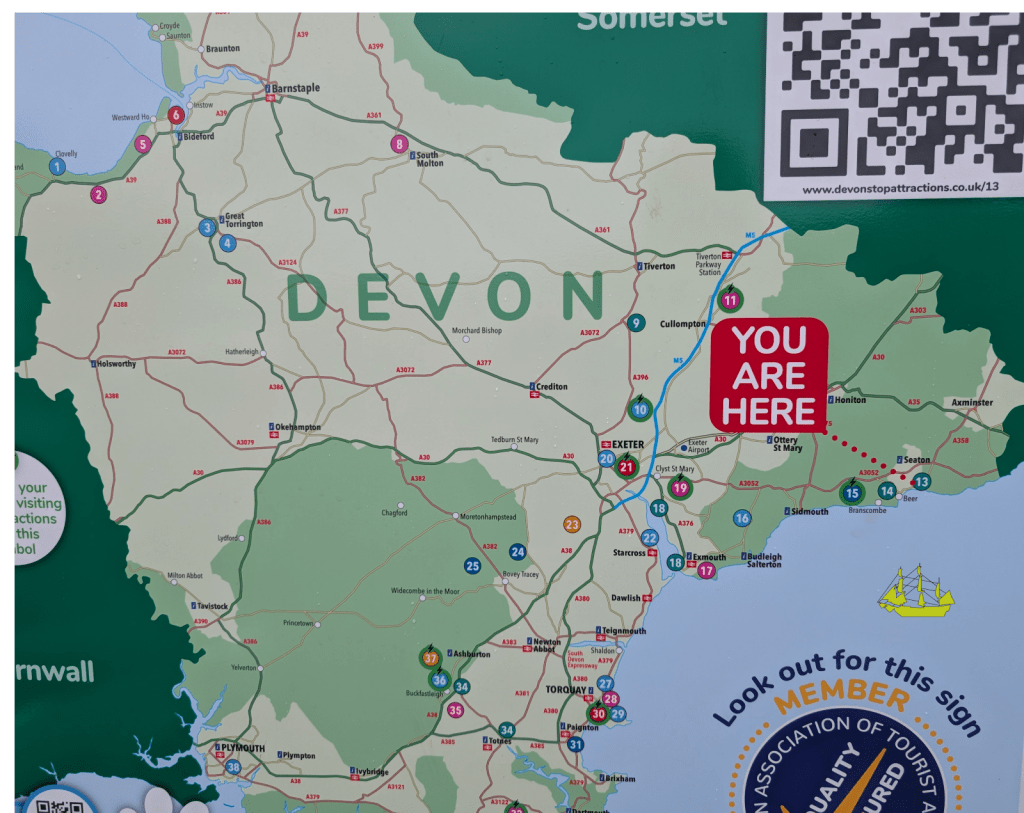
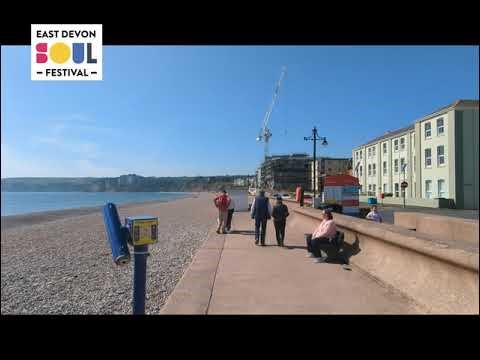
The seaside town of Seaton sits on the South coast of the UK, just inside East Devon from the Dorset border, flanked by its better-known siblings Lyme Regis and Sidmouth.
Seaton has a natural aspect, sitting at the end of a wide valley, flanked by beautiful countryside, beaches and cliffs. The town itself has many underused facilities including lots of available venues, outside spaces, some with seating and power, plenty of parking and reasonable transport links. Unlike its bordering brethren, Seaton is never overrun by tourists in the summer months due to a lack of historic buildings or perceived beauty. There is a flow to the way that you can circle the town, making it an ideal location for a festival.
So there are 5 nights until the next full moon, where you can leave the comfort of your house and safely venture out to the wonderful Marine Theatre in Lyme Regis where you will happen upon East Devon Soul presenting the wonderful music of the Buena Vista Social Club recreated with a Bristol swagger by some of the best UK latin musicians. What more do you want to usher in Spring and Summer 2025. What better sound or view will you get in the UK to experience latin tropical vibes. Enrollar, enrollar, come and join the moon!
The world runs on the concept of truth. That we believe what people say. We invest in the words that come out of people’s mouths. Governments around the world twisting the truth for their own political gain, brought into power on other untruths whilst the general public look on with their mouths agape. Oh no they did it again. I can’t believe it. Brexit, the great untruth in the UK, a country taken on a ride by arch villains Johnson and Cummings with the support of other despotic individuals and countries. You are told by lying parents to tell the truth. It’s a great aim but one that falls apart quite easily. Small white lies you tell friends so that they are not offended by something. The world of marketing lives in a lying state. Some people are naturally truthful. TV show The Traitors features people blindly telling fibs to fellow humans who have supposedly, instantly become their best friends of all time ever. Only for this lack of truth to come out and their shocked expressions gradually dawn to the realisation that they are on a reality show called The Traitors. It should be the name for all politicians, holding yet another photo opportunity in front of the flag. Boldly lying where someone else has gone before. Selling their country down the river to the highest bidder, not really caring about much other than to line the pockets of themselves and friends. UK politician Jeremy Corbyn told the truth. He couldn’t help himself. No politicking around. Straight out truthfulness which made him a threat for those in power. Football managers lambasting their team after a shocking display, gradually the players will stop performing for him or her. Inside the dressing room the right amount of truth can be told, to motivate and provide direction. Neurodiversity often presents in extreme levels of truth telling. Not being able to cover up the truth. The whole truth, nothing but the truth. We lie to our children, tell them things will get better. The world won’t be destroyed in an almighty fireball due to the carelessness of previous generations, or a nation voting for arch villain Donald Trump. That things will get better. As a musician I prefer it when someone tells me straight out what they think of a performance or a song I have made. Usually it is a family member, outright frank about it. Whatever the situation. My biggest critics. Actually, couldn’t they be a little less upfront with the truth. To develop you need the truth. Record companies telling you exactly what they think, nuanced feedback. Feed forward. Propel you towards improvement, hopefully. You need a thick skin to hear the truth. About you, your personality. God you talk too much. You just seem to always be discussing yourself. Narcissistic. My youngest daughter always tells the truth. God dad, you look old. Thanks there. Hairdressers telling clients how wonderful their new style is. Donald look in the mirror. Outfits that are perceived to flatter. Living in a truthful space, knowing who you are, understanding the self takes strength but is a positive position to exist within.
It is so tiring chasing the truth, unpacking messages from politicians so that actual real information doesn’t have to just drip through social media channels. Truth should be up front and central. We have to tell the truth in our lives. I can’t go into work and start making things up because it suits the position I would like to take. There should be a truth monitor standing beside any political leader when they are talking, interrupting each time lies flow from their mouth. Trump’s speech would be very staccato. Hold people to account, be real, be human. BBC verify is all very well, but it occurs after the fact (checker). We need instant buzzers that sound whenever an untruth is made, although the cacophony would make life difficult to live. Donald Trump, that doyen of truth, announced that there will be no wars now he’s in power. King Canute. King c**t. No Ukraine, Gaza, Syria, Afghanistan. Tell the truth. Challenge the guy, ask him how this is going to happen because we all follow the sentiment but no one else has managed to achieve this. He must have superpowers. Or snorted too much coke. Narrowly missing having his head blown off, a shot grazing his ear so that diehard supporters can copy his Van Gogh left ear plastered image. A cult in charge of one of the most powerful countries in the world. Plus ça change.
The contrast between US presidential candidates Kamala Harris and Trump is quite staggering. On one side there is love, compassion, fun, normality, enjoyment, balance and plain speaking. On the other, lies, deceit, nonsense, chaos and confusion, bizarre behaviour that screams anger. Angry that he can’t be this good person. Angry with himself and the world. Retreating into his bathroom, looking at himself in the mirror and venting. The world’s gone orange, a colour of life and peace. There is great fear of everything around him. Insecurity. Is there a way that someone like Trump can return to normality, be saved from a life of lies, unhappiness manifest in being Mr Angry. Maybe Trump needs some time away from the disunited States, a cultural trip to Europe, France perhaps. Sitting in a café, wearing a beret, smoking Gitanes and pontificating about the latest conceptual art piece. Paris, the city of lights and love. Reach out Donald, don’t hide behind your fracking wall. Maybe it could save him. Grumpy old git. Face not moving due to a lifetime of botox, all sense of normality or expression, the creases of life eradicated from his image, cryogenically frozen although still robotically moving from platform to platform. Terminator 4. The orange one. Symbol of joy and experimentation within Johan Cruyff or Denis Berkamp. He keeps coming back, like a clown on a spring popping up from a box, wobbling around, putting up barriers, retreating within. He’s just scared of his own mortality. Narcissistic c**t.
Delving into the deep recesses of what it means to be a creative musician opens up an array of projections and possibilities, a question that is impossible to answer but which I feel needs to be asked. My interest is as a Higher Popular Music Education (HPME) researcher seeking to discover whether university education is supporting current popular musicians to explore their true creative selves. As neoliberalism sweeps through the UK university sectors employability is linked to course design and outputs; I wonder whether HPME can in part replace record company A+R departments who gambled, took risks with young creatives and provided them with the time and mentoring to achieve their maximised music identity. If we are going to mentor musicians then surely it is supporting their creative journey which is vital.
In traversing the slopes of creativity, I pose an open question for exploring what it means to be a creative musician, a conversation which will support the debate and open pathways of exploration. Through jazz, classical, dance, punk, rock and other global music genres are there interconnections which help to define what a creative musician is?
There are many elements of creativity that connect to perceived elements of musicality, which resonate with all elements of the creative arts including flexibility, associative thinking (chance and freedom), collaboration, metaphorical thinking (comparative) and synthesising (mixing conscious and unconscious) (Vaughan, 1977, p.72). It is the interconnection between conscious and unconscious thought processes that help to define creative artists. Richard David James (Aphex Twin) used dreaming as a way of exploring the unconscious state, recalling sounds, motifs and atmospheres which he would create in his waking state. Teaching at the German Bauhaus school in the early 20th century, Johannes Itten, used breathing exercises and movement to help students move into trance-like states, to reduce the impact of considered thought.
Maybe we need to leave musicians alone or press the reboot button located on their person. Engaging with the concept of natural artistic creation, musicologist Michael Spitzer argued that musicality is innate within the human species and the naturalness to perform and create it is stunted through a series of cultural phenomena. Within art, cutting back to the original naturally creative self is achieved through unlearning, where previous education and the creation of a blank slate on which to provide the space and inspiration to explore creative avenues is attained. British ethnomusicologist John Blackingdiscovered that the Venda people of South Africa believed that music existed as something naturally assumed through the human body and socialised experiences; trance induced states and automated learning from birth assumed an automatic imbibing of musicality, where music is life: life is music.
Correlating to the emotional and cognitive elements of creativity, arriving in the flow, being lost within artistic creation intrigued Hungarian psychologist Mihalyi Csikszentmihalyi. Teaching student artists to recognise when they are in a flow state and techniques on how to get there, should be an ingredient of popular music education. Research psychologist and former partner of Mick Fleetwood (Mac), Jenny Boyd interviewed musicians about their creative experiences discovering numerous recollections about getting lost in music, being in a flow state, reducing the conscious impact on the creative process. Boyd reflected on Carl Jung’s theory that ‘the centre of the total personality lies midway between the unconscious and the conscious,’ with this transference being an important point. Her findings revealed that some musicians used meditation to transcend to ‘no mind’ and ‘referred to a kind of mental ‘stillness’ necessary for the unconscious to make itself known through creative expression’
Alternatives to exhorting technical proficiency, within my own research (Blank Canvas) I explore connections between UK art education and the creative development of popular musicians. Some of the main elements of creativity relate to interdisciplinary features. I argue that musicians and music educators should look away from music specific ideals to develop musicianship, with art schools being one avenue overdue for in depth exploration. Musicians could expand their outlook to include subjects such as philosophy, psychology, culture, politics and science for example to help inform practices.
Inspired by the Bauhaus, Belgian socio-cultural theorist Thierry De Duve believed that the closer someone existed to a newborn state then the greater their natural level of creativity. He also crucially detailed three periods (3 is always the magic number) within the field of visual arts, with the three main elements of the third section of the schema coinciding with key components of popular musicians who exploded through the 1960s and 70s: Attitude – Practice- Deconstruction.
Looking at these independently then:
Attitude – is a difficult word to define but can be seen as an artist who takes risks with a radical edge, not being a slave to conformity or tradition but aiming towards pure creativity, without allowing anything to stand within their pathway.
Practice – can refer to a few constituents but in general connects to the creative process, letting this evolve and revelling in the journey. It can also be related to the actual physical practice required to assist in the development of enhanced musicality.
Deconstruction – again has meanings which intersect, including deconstructing collective ideas but also deconstructing the music itself into constituent parts.
Taking these three main elements into consideration could be vital for the nurturing musician who is looking for a framework of creativity, examining the main elements then utilising work that is personal and true to the self alongside an openness to collaboration, whether with other musicians or themselves.
Entering the traditional music realm, key elements of musicianship could be seen as pitch and rhythm but exactness within either doesn’t tell the whole story for a creative musician. I believe that all humans have their own natural pitch and timing capabilities and emphasising or enhancing these is an area of interest for the creative musician. TheVelvet Underground’s Mo Tucker drummed with a natural non-linear expression counter to exactness exploited by the lifeless click used by many drummers and rhythm exponents. The random swing of an Akai MPC drum sampler gave a machinic but naturalness to early hip hop programmed beats.
Art school students such as ambient pioneer Brian Eno and post punk musician Gina Birch invited chance induced and randomisation into their music making, inspired by conceptual art. Bill Drummond of the KLF (alongside managing Echo and the Bunnymen and Teardrop Explodes) believed in conceptual processes where the idea is of equal or greater importance than technical efficiency or outmoded musicianship. Alice Fox of 80s band The Marine Girls still employs processes of unlearning extended from the Bauhaus, another punk infused artist who saw the value in recalibrating, trying to stop playing the same patterns which define you and reflect your learned traits. Allowing the system to take control as in the artistic science of cybernetics where the process is complexly cross-connected where organism is key, as it is the art piece and everything which exists around it which is where the magic happens.
Through my research it is simplicity that is an important element, where the concept defines the process of creation. Minimalist music inspired by the four grandees (La Monte Young, Steve Reich, Terry Riley and Phillip Glass) embedded itself into popular music genres, stripping away extraneous parts which masked the bounce or frequencies of music. Minimalism = simplicity, providing space between the notes where the conceptual nature allowed the music room to breathe and the listener the chance to place their own meaning within the music. I believe this is a vital element of dance music genres in particular.
Music writer Simon Reynolds in his opus on dance music (Energy Flash), stated that iconic Detroit house producer Juan Atkins undertook philosophical explorations whilst compiling DJ sets, trying to enter the mind of the creator of a track to work out where the next one should match. As a non-traditional musician, the mind is an important tool for DJ’s and electronic producers. Many musicians aim to mimic but for the artists within the field, being innovative and original is a key goal. Bristol musician Tricky shared his creative philosophy: ‘I wanted to make something that no one’s ever heard before – I wasn’t interested in anything else’ (Fisher, 2014, p.47)
We are in a period within the music industry of saturation, where from 60,000 albums a year in 2002 rising to almost that number a day in 2021. How do you break through this noise, a morass of content waiting to engulf you. Gatekeepers still exist but competition is fierce so originality and innovation might be the only way to break through; surely the music buying public are ready to engage with this. Exploring the past to make judgements on the present – sociocultural theorist Mark Fisher coined the term popular modernism where a modernist avant-garde exploration for future innovation is matched with a populist reach. Fisher saw in post punk, a reworking of the past where the present or the future is unknown creates work which has longevity and depth, a concept where the interconnection of experimental and commercial ideas merge. Surely this is where we need to emerge.
To be conscious of the unconscious is a vital element of creativity, this interplay which defines the connection between known and unknown the learnt and unlearned – musical creativity is a bi-play of numerous elements but maybe it is this intersection which should be concentrated on when supporting musicians to develop their creative selves. Focusing on the development of creative expression in musicians is key.
References
Boyd, J. and George-Warren, H. (2013) It’s not only Rock ’n’ Roll. London: John Blake Publishing.
Fisher, M. (2014) Writings on depression, hauntology and lost futures. Zero Books.
Spitzer, M. (2021) The Musical Human: A history of life on earth. Bloomsbury.
Vaughan, M. (1977) ‘Musical Creativity: Its Cultivation and Measurement’, Bulletin of the Council for Research in Music Education, (50), pp. 72-77.
The Slits pre gig setup – Hornsey art school 1977 (Ana da Silva)
Delving into the deep recesses of what it means to be a creative musician opens up an array of projections and possibilities, a question that is impossible to answer but which I feel needs to be asked. My interest is as a Higher Popular Music Education (HPME) researcher seeking to discover whether university education is supporting current popular musicians to explore their true creative selves. As neoliberalism sweeps through the UK, university sectors employability is linked to course design and outputs; I wonder whether HPME can in part replace record company A+R departments who gambled, took risks with young creatives and provided them with the time and mentoring to achieve their maximised music identity. If we are going to mentor musicians, then surely it is supporting their creative journey which is vital.
In traversing the slopes of creativity, I pose an open question for exploring what it means to be a creative musician, a conversation which will support the debate and open pathways of exploration. Through jazz, classical, dance, punk, rock and other global music genres, are there interconnections which help to define what a creative musician is?
Creativity connects to perceived elements of musicality, which resonate with all elements of the creative arts including flexibility, associative thinking (chance and freedom), collaboration, metaphorical thinking (comparative) and synthesizing (mixing conscious and unconscious) (Vaughan, 1977, p.72). It is the interconnection between conscious and unconscious thought processes that help to define creative artists. Richard David James (Aphex Twin) used dreaming as a way of exploring the unconscious state, recalling sounds, motifs and atmospheres which he would create in his waking state. Teaching at the German Bauhaus school in the early 20th century, Johannes Itten, used breathing exercises and movement to help students move into trance-like states, to reduce the impact of considered thought.
Maybe we need to leave musicians alone, or press the reboot button located on their person. Engaging with the concept of natural artistic creation, musicologist Michael Spitzer argued that musicality is innate within the human species and the naturalness to perform and create it is stunted through a series of cultural phenomena. Within art, cutting back to the original naturally creative self is achieved through unlearning, where previous education and the creation of a blank slate on which to provide the space and inspiration to explore creative avenues is attained. British ethnomusicologist John Blacking,discovered that the Venda people of South Africa believed that music existed as something naturally assumed through the human body and socialised experiences; trance induced states and automated learning from birth assumed an automatic imbibing of musicality, where music is life: life is music.
Correlating to the emotional and cognitive elements of creativity, arriving in the flow, being lost within artistic creation intrigued Hungarian psychologist Mihalyi Csikszentmihalyi. Teaching student artists to recognise when they are in a flow state and techniques on how to get there should be an ingredient of popular music education. Research psychologist and former partner of Mick Fleetwood, Jenny Boyd interviewed musicians about their creative experiences discovering numerous recollections about getting lost in music, being in a flow state, reducing the conscious impact on the creative process. Boyd reflected on Jung’s theory that ‘the centre of the total personality lies midway between the unconscious and the conscious,’ with this transference being an important point. Her findings revealed that some musicians used meditation to transcend to ‘no mind’ and ‘referred to a kind of mental ‘stillness’ necessary for the unconscious to make itself known through creative expression’
Alternatives to exhorting technical proficiency, within my own research (Blank Canvas due for release with Intellect publishing in autumn 2022) I explore connections between UK art education and the creative development of popular musicians. Some of the main elements of creativity relate to interdisciplinary features. I argue that musicians and music educators should look away from music specific ideals to develop musicianship, with art schools being one avenue overdue for in depth exploration. Musicians could expand their outlook to include subjects such as philosophy, psychology, culture, politics and science for example to help inform practices.
Inspired by the Bauhaus, Belgian socio-cultural theorist Thierry De Duve believed that the closer someone existed to a newborn state then the greater their natural level of creativity. He also crucially detailed three periods (3 is always the magic number) within the field of visual arts, with the three main elements of the third section of the schema coinciding with key components of popular musicians who exploded through the 1960s and 70s: Attitude – Practice- Deconstruction.
Looking at these independently then:
Attitude – is a difficult word to define but can be seen as an artist who takes risks with a radical edge, not being a slave to conformity or tradition but aiming towards pure creativity, without allowing anything to stand within their pathway.
Practice – can refer to a few constituents but in general connects to the creative process, letting this evolve and revelling in the journey. It can also be related to the actual physical practice required to assist in the development of enhanced musiciality.
Deconstruction – again has meanings which intersect, including deconstructing collective ideas but also deconstructing the music itself into constituent parts.
Taking these three main elements into consideration could be vital for the nurturing musician who is looking for a framework of creativity, examining the main elements then utilising work that is personal and true to the self alongside an openness to collaboration, whether with other musicians or themselves.
Entering the traditional music realm, key elements of musicianship could be seen as pitch and rhythm but exactness within either doesn’t tell the whole story for a creative musician. I believe that all humans have their own natural pitch and timing capabilities and emphasising or enhancing these is an area of interest for the creative musician. TheVelvet Underground’s Mo Tucker drummed with a natural non-linear expression counter to exactness exploited by the lifeless click used by many drummers and rhythm exponents. The random swing of an Akai MPC drum sampler gave a machinic but naturalness to early hip hop programmed beats.
Art school students such as ambient pioneer Brian Eno and post punk musician Gina Birch invited chance induced and randomisation into their music making, inspired by conceptual art. Bill Drummond of the KLF (alongside managing Echo and the Bunnymen and Teardrop Explodes) believed in conceptual processes where the idea is of equal or greater importance than technical efficiency or outmoded musicianship. Alice Fox of 80s band The Marine Girls still employs processes of unlearning extended from the Bauhaus, another punk infused artist who saw the value in recalibrating, trying to stop playing the same patterns which define you and reflect your learned traits. Allowing the system to take control as in the artistic science of cybernetics where the process is complexly cross-connected where organism is key, as it is the art piece and everything which exists around it which is where the magic happens.
Through my research it is simplicity that is an important element, where the concept defines the process of creation. Minimalist music inspired by the four grandees (La Monte Young, Steve Reich, Terry Riley and Phillip Glass) embedded itself into popular music genres, stripping away extraneous parts which masked the bounce or frequencies of music. Minimalism = simplicity, providing space between the notes where the conceptual nature allowed the music room to breathe and the listener the chance to place their own meaning within the music. I believe this is a vital element of dance music genres in particular.
Music writer Simon Reynolds in his opus on dance music (Energy Flash), stated that iconic Detroit house producer Juan Atkins undertook philosophical explorations whilst compiling DJ sets, trying to enter the mind of the creator of a track to work out where the next one should match. As a non-traditional musician, the mind is an important tool for DJ’s and electronic producers. Many musicians aim to mimic but for the artists within the field, being innovative and original is a key goal. Bristol musician Tricky shared his creative philosophy: ‘I wanted to make something that no one’s ever heard before – I wasn’t interested in anything else’ (Fisher, 2014, p.47)
We are in a period within the music industry of saturation, where from 60,000 albums a year in 2002 rising to almost that number a day in 2021. How do you break through this noise, a morass of content waiting to engulf you. Gatekeepers still exist but competition is fierce so originality and innovation might be the only way to break through; surely the music buying public are ready to engage with this. Exploring the past to make judgements on the present – sociocultural theorist Mark Fisher coined the term popular modernism where a modernist avant-garde exploration for future innovation is matched with a populist reach. Fisher saw in post punk, a reworking of the past where the present or the future is unknown creates work which has longevity and depth, a concept where the interconnection of experimental and commercial ideas merge. Surely this is where we need to emerge.
To be conscious of the unconscious is a vital element of creativity, this interplay which defines the connection between known and unknown the learnt and unlearned – musical creativity is a bi-play of numerous elements but maybe it is this intersection which should be concentrated on when supporting musicians to develop their creative selves. Focusing on the development of creative expression in musicians is key.
References
Boyd, J. and George-Warren, H. (2013) It’s not only Rock ’n’ Roll. London: John Blake Publishing.
Fisher, M. (2014) Writings on depression, hauntology and lost futures. Zero Books.
Spitzer, M. (2021) The Musical Human: A history of life on earth. Bloomsbury.
Vaughan, M. (1977) ‘Musical Creativity: Its Cultivation and Measurement’, Bulletin of the Council for Research in Music Education, (50), pp. 72-77.
Music can transport you, take you to a different plane, away from the daily thoughts, worries, the mundane to another planet. Speaking to your heart and galvanising emotions which speak to your very humanity. The reason for living. Life as it should be. Pure and clean. People on stage transmitting their energy, joy, talent so that all that matters is what stands before you, presenting their magic. Masked or with faces free, connecting from their souls to yours. The power of stabs, sharp short brassy bassy arrows into you, flying from the platform through the bodies of the thronging mass, weaving and dancing to the flowing beats. Beauty emanating from each individual instrument to create a cohesive whole, subtle rhythmic interplays, changes in dynamics which have infinite steps, dialing through equalisation. The tightness of power, the strength of being exactly together at the same point with nuanced differences, pushing instruments, their resonance connecting back to their players, feeling, transmitting, transporting. Music can set us free, unleash the power of the collective, transcend the wrongs of the world and provide hope, that there is something good out there.
Sitting on the toilet praying for the Lionesses to score. Seconds to go. Divine intervention is needed. Surely it can’t work but suddenly there is a roar from next door, and they have done it. The teenager Agyemang has scored, England are through to the semi finals if they win a penalty shootout against Sweden. This is a comedy of errors, no praying needed, just watching in disbelief as the pressure becomes too much for each spot kicker and the goalkeepers are getting better and better. Up in Liverpool, rushing back for the semi final second half. Again behind, this time to the underdogs Italy. We don’t look like scoring, Italy are being cynical, delaying, fouling. I get in the hotel lift, go downstairs, go outside. Still no goal. It isn’t going to happen this time. I ascend back to my sweeping apartment, turn on the Telly. Still playing but it all looks forlorn. I give up watching. I give up on the lionesses, but then I think, one last moment, to the toilet and really pray, for the people who this means so much too, all the fans, my partner especially. I’m on the BBC sports app, then suddenly a 1 appears by England’s score. You must be kidding.I do believe in god. Incredible. I turn the TV on again and watch extra time where Italy give us a silly penalty, Chloe Kelly steps up, the penalty is saved but she gobbles up the rebound. No worries. Spain will surely beat us in the final, so technical, passing patterns. We start well for a change, matching them but gradually they take the ascendancy and score. Lauren James looks lost and injured. Kelly comes on again, and immediately there is more drive and impact. 1-0 at half time is a good score. We will come back, we do, Alessia Russo planting an almost identical header to the Spanish opener. We drive on but can’t add a second. Extra time, Spain start to take control again. We defend for our lives. Penalties again, all of our senior players off exhausted, injured, wounded. But Hannah Hampton, notes written up her sleeve, she knows the score. No praying needed. Chloe Kelly to win it. Of course it is. Struggles with her club, a loan transfer back home to Arsenal, redemption, a European cup, back with the Lionesses. No nerves. Loving the moment. Repeating her act of three years before. The game changer, the finisher. Incredible. The story was always going to end this way wasn’t it.
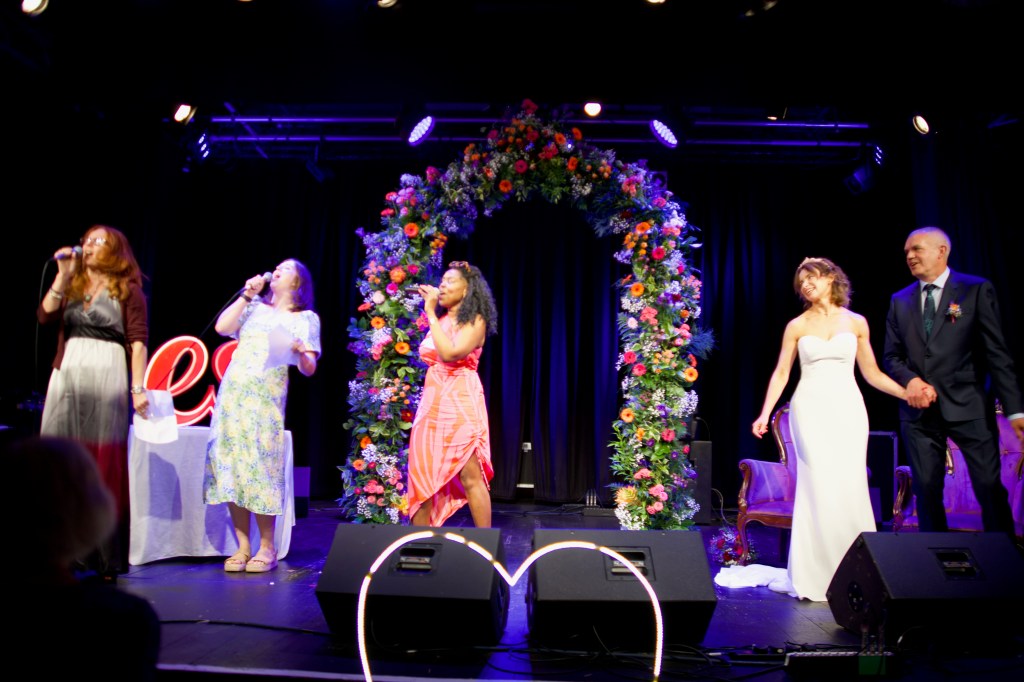
More than months of planning, getting in contact with old friends, spreadsheets, money falling out of your pocket in increasingly large numbers as everyone adds a nought for a wedding, excitement, stress, joy, connection, then it is all over bar the shouting. Mopping up the tail. Generosity overflowing. Heartbeats gradually slowing down over a beautiful honeymoon, amazingly bought by friends. Released from any thought of money. What an occasion to bring two clans together, friends you know very well and old acquaintances rejoined. A special event. Cards littering the house, each with incredible heartfelt messages. Was it all worth it, months of worrying how to pay back now, financially skint. Yes. Yes. Yes. Memories are worth more than cash. They define you and your life. Money is just an accoutrement. Something forever to look back on. A union for life surrounded by friends for life. Amazingly no dogs. Nor any horses. Coming together with your life partner, forging a life together that now has a neatly tied know, joined, bonded. A close relationship brought officially together, two people who don’t believe in official titles, non religious, but believe in each other and their friends. We all want to do it again. Plan it again. Look forward to it again. Our marriage ceremony and party are in the past but our journey forging on into the future. Something we will always remember even as old age catches up with us. An event where you are spread too thin, trying to talk with everyone who has come, but time is too short, your voice becoming increasingly hoarse. Life together starts anew amongst the strewn paper and card, everyone overly generous and beautiful. What a world. What a life.
Does it change anything, being married (or Civil Partnered as we are not allowed to say that we are married, but civilly joined together)? There is a feeling of solidity. Of a life message, a commitment to each other. It provides roots, rooting for each other and a friendship group. The day meant so much, a whirlwind of people you know. Who do you talk to for more than 20 seconds? Trying to ensure that people who have come the furthest, made the biggest sacrifice, get most attention. The event really needs to go on for a few days rather than just the hours of one day.
Honeymoon period, a time to flop. A few days away where everything is bliss. Perfect. Days of planning gradually ebbing away, flowing from your body, massaging, gently kneading the stress away. Your friends and family had come together to buy you this holiday, with spending money too, so nothing to worry about. Wander around the vineyard, sit in the gardens gorging on the everlasting and beautiful breakfast. Walk off and find a sneaky perch for a little daily sojourn, goods attained as part of the wedding present from a seedy back room, two young guys unaware that they they can take their vanilla or Tangerine Dream away rather than blow in each other’s faces amongst the featureless walls. Sucking and blowing for its own sake.
Does it feel different to be civil partnered? The clans are joined, we have come officially into our families, we have literally tied the knot. We are together, forever. How cool. People ask, ‘how does it feel to be married? Do you feel any different?’ It is difficult to answer at this moment as my mind is still racing around trying to take it all in, but the anwer will be yes. A closened bond. A public display of love and commitment. We don’t like using the phrase ‘man and wife’ or ‘husband and wife’. We are not religious. We are staunchly feminist, humanist, into equality and nonhierarchical worlds. Leading individual paths together. Walking hand in hand down the street, ready to take on the world with a bit of extra power in our union.
Obsessive about exercising, many people can’t resist the lure of the gym. Increasingly dipping into the well, great sadness overtaking when away and the local gym is not available. Endorphins. Fitness. Health. The need to sweat and really take your body to another level. Some people obsess with yoga, a downward dog view of the world, upside down looking at the ceiling. When you see humans walking from upside down it looks like they are dancing, moving more quickly, like an old film but with modern beauty. An unreality that is surprising. There is a religious energy to exercising, especially keeping it long and slow, bending over to put your hands under your feet, connecting the body to the ground and beyond. Resonating with the wooden floor of the local church hall, top to bottom, history seeping into the body as impossible angles are gradually achieved, the body contorted into relaxation rather than exhausted into the same state. Both can make you feel great, taking the mind through body to another world, a fantasy land where money, food, friends, family, politics and location don’t exist. A purity of feeling as your legs go increasingly faster or push against greater resistance. Breathing deeply, closing eyes and dreaming off whilst building up strength and stability. Body Balance, Pilates, Yoga all aim to relax you. Take your head away from itself, transporting to another world that is grounded but also in a dream state. A connection to the earth allowing the mind to wonder free or to be empty, the voices of the mind dumped for an hour or so, cleansed, pure. Sweat dripping from your eyes whilst cycling wildly is the ultimate experience in the gym, pushing from a position of strength, feeling powerful and alive, electronic dance beats propelling you forward. Pushing on as 80s nostalgia floods from the speakers, knowing smiles and the occasional accompanying voice from your fellow participants. Choosing to be here, not under contract, you do you babe. Music in exercise is an essential way of transporting your mind to another galaxy, another time, freeing your mind whilst getting fitter. Good for the body and mind. Spiritual. India. The gentle lilting tabla and tanbura or harmonium, providing a wavering drone and clipping beat, tones and rhythms pulling you into mystical worlds, the misty ghats of Varanassi or the cool breeze of the south, slower, easier, less spicy. Varkala. Upbeat driving beats in spin transform the gym to a glitzy flashing club, a pop neon plastic world where everything is full on, to the (Pepsi) max. Sugar and sweet rather than the green tea or chai of yogic energy. Both can make you feel amazing, especially transferring from one to the other. Ying and Yang. Movement and stillness. Speed and strength. Dripping with sweat from cycling, the heart racing increasingly faster, then stopping, transforming, getting the mat, slowing down, flexing, breathing in through your nose and out of your mouth. Slowing down. Stretching. Eyes closing.
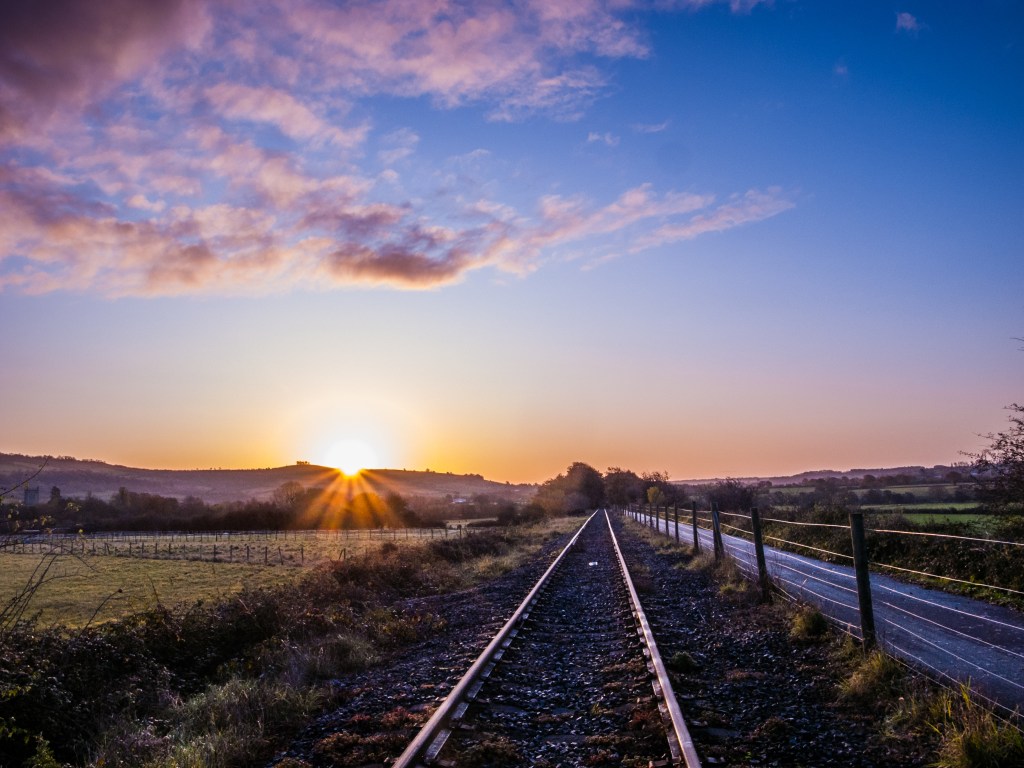
I love waking up and seeing the view from my kitchen. The endless variety that the same picture conveys, changed by seasons and the vagaries of the English weather. Coastal winds transforming the seascape unfolding in front of me. The variances as the sun rises from a slightly different position each day, spraying deep orange and peach light that gradually lightens as the sun rises, turning our home into a constantly varying symphony of colour, replicating musician and artist Brian Eno’s light boxes, never the same, always different. Nature drenching its mood and perspective. Whilst studying for my doctorate I used to cycle most days between the south western English cities of Bristol and Bath, stopping at the same point and snapping a shot on either my phone or camera. A beautiful spot where the city was left behind and bucolic countryside emerged, fields, horses, a church spire rising out of the English village, creating balance in the view. I was entranced by the differences in similarity, the chance to look more deeply when you start to know every element in your picture. Sometimes the horse was there but other days not, or in a different location creating an alternative balance. Standing still and contemplating. Repetition providing the opportunity to stay in the moment, the place, the view. Not a set of holiday snaps which blindly take you around the pool, beach, lunch, church, beach, afternoon drinks, sunset, dinner, party. A beautiful view is to be savoured, unfurled through the ages, the chance to measure your life alongside the beauty of humans and nature. An opportunity to be static and contemplate change, to work out what it is all about. To stop rushing around, stand on one leg and breathe, the tree of yogic life. Zen gardens. Life is everything around us. Let’s be more observant, take time out, put the phones away and actually live, fighting the demands and distractions of the modern world. Recognise what is going on around us, the different dynamic of certain moments or days.
Why does the start of the week feel different to the end? Parts of the year have certain scents, views, feelings, which time stamp our development. Facebook reminding us about what was happening on the same day one, two, seven years or even eleven years ago. It all seems so recent. Present, in the now. Time has sped past, our lives juggernauting along at breakneck speed, unable to slow it down as caught in a merry-go-round, gliding up and down on a horse, repeated views blurring past from the bottom of the hill. Our lives have reportedly changed over the 58 years I have been present, but it all seems the same to me. The UK. The long hot summer of 1976, Prime Minister Margaret Thatcher, exciting pop music with punk screaming into view, strikes, extreme weather, long periods of drought followed by flooding, a warming globe, familiar places and faces. Not a static life spent in one location, from birth, school, work to marriage, children and death but a multifaceted one travelling the planet, moving from place to place, adventures that make life exciting and dynamic. London, Paris, Glasgow, Bristol with a swathe of smaller locales in between. Days which were dynamic, a cure for the humdrum, a world of creativity and chaos. Moving from cities to the countryside has provided boredom, the ability to stop and stare, think deeply, be at peace and start to wonder and wander, contemplate, remember, look forward. Internal conversations becoming clearer as the fog starts to drift away, lifting from the valley floor and revealing a beautiful landscape stretching into the distance, providing the first glimpses of clarity on life.
Unveiling of the new East Devon Soul logo. Website to come in the next few months as we start to reveal all about our exciting new festival in the beautiful seaside town of Seaton, East Devon 3-5th July 2026
Months pass without time to stop and think, an endless treadmill of work, gym, family, TV. As the buds of spring start to blossom, days stretch out further than Lance Armstrong’s stamina, mornings and evenings gradually blending into one. Bank holidays at Easter result in terminally long weekends. Bank holidays at the end of May result in extending this joyous month, a riot of colour and for one year only, no rain on the plain like Spain, parching the grass, concreting the soil. Another break arrives. Time to forget about the 9-5, replaced by excessively trying to catch up with all those other things which life throws uncaringly in front of you. Cleaning, tidying, sorting, moving, gardening, driving, deadening. Easter provides a break but one that defines the next stage, part two of the year. Winter is now truly behind us and beautiful bucolic times stretch ahead. The chance to watch your team lose twice rather than once over a long, long weekend. Top top players needed. So, by repeating words that means they are doubly important. We need a top top top top upgrade on all our players, manager and coaching staff. The food is good though, for the players. Fans suffer with blasted dodgy sausage rolls and overheated Balti pies. Extended weekends sometimes provide an opportunity to think about being creative, write some words, catch up on research, make music, take photographs. It always feels like the busiest time, when extra hours available are eaten by Pac Man munching creatures. Also, a time to read, books, paper, articles, to take a breath in and move forward. The pope died today after a long illness. Thoughtfully waiting until after his Sunday sermon before letting go, joining his friends in heaven and beyond, a good person by all accounts.
Bank holidays do have an end, but they are points in time where lots of people have the same time off. Not emergency or health workers, service trades or tourist spots. They are busier than normal coping with the mass of over drinking, overeating, dangerous swimming, human abandon. Time off from the daily grind. Moments which can feel uplifting and liberating if you are in a happy space, a couple, with family and friends but can be isolating, alone, watching men pot balls on a green baise, endlessly from cue tip to round object, bouncing around, trying to escape and leave nothing behind. The empty carnage from the stacked-up start of a frame. It is relaxing apparently, the heat of battle but with gentle contemplation, unfolding over time. Day after day after day. Bank holidays can change the flow of time, stop us in our tracks, Halt. Who goes there or where. Routines upended by not needing to do anything. So, we could mow the lawn, fix fittings, dump the unused wardrobe, reconfigure our spaces. Or just go for a long walk, aimlessly meandering off into the distance, not knowing when to turn round as there is no time limit. It just goes on. All is quiet in the countryside, whereas cities hum with eager anticipation, music, drink, desperate to party to ignore the upcoming slip back into tedium of normality. A release. Melancholic moments as your team finishes the season either relegated to a lower division or deep in mid table mediocrity, months of time off to contemplate the start of another cycle. New manager. New players. New kit. New hope. We start again.
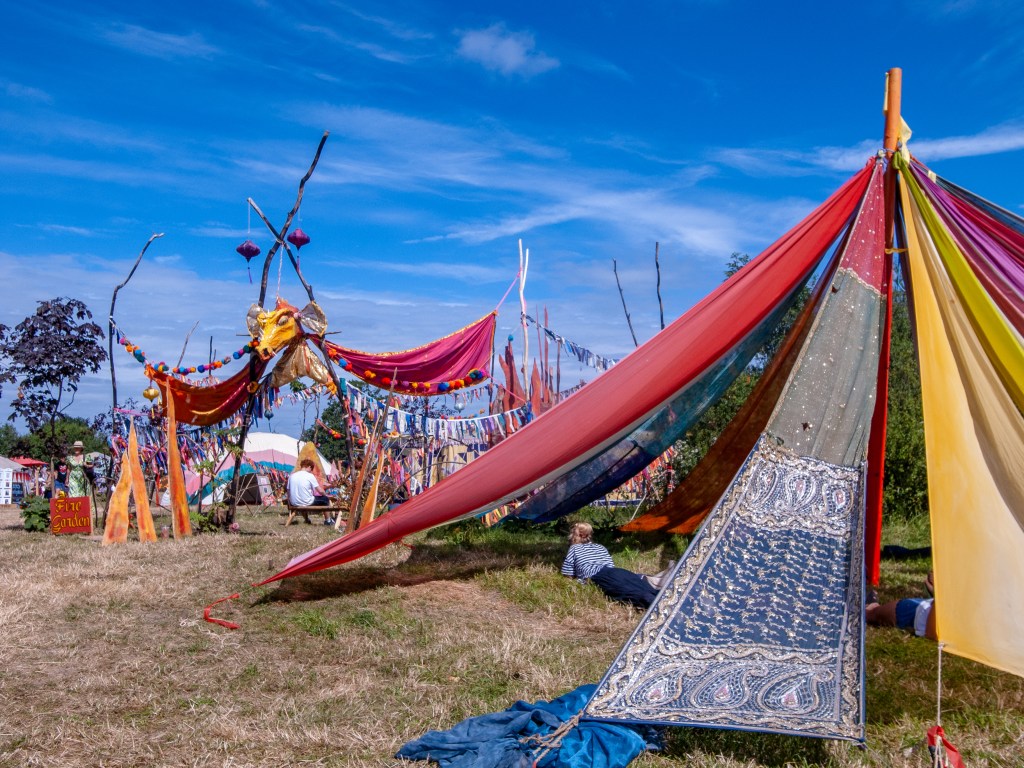
End of May sparks festival season in my brain. Time to dive into the gently rotting shed and brush mildew off my festering tent. Will it appear again this year? Not yet, but in due time. preparing to stand outside in various weather forms, jigging and dancing and chatting, music wafting through the the ozone ecosystem pollen infected air. Time can finally standstill.
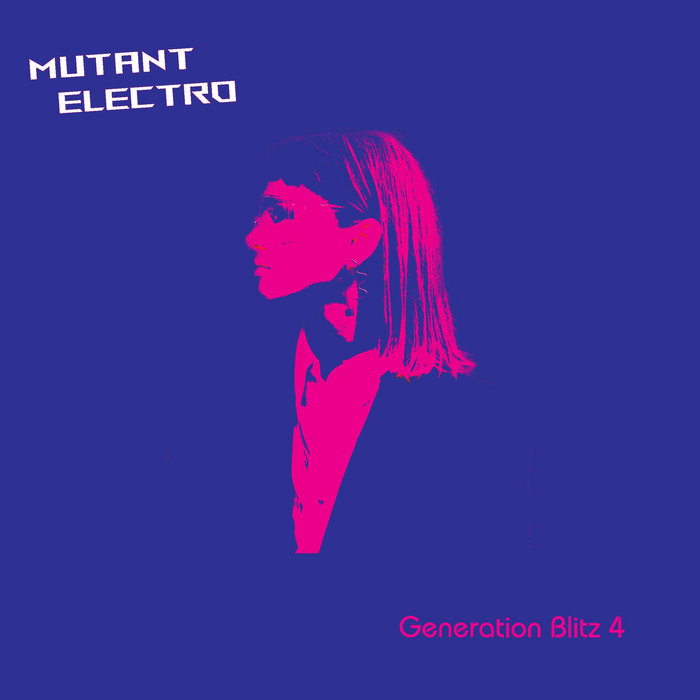
I am very excited to be part of the latest Generation Blitz album with the track Inochi: Terrain, a great CD, vinyl, streaming offering featuring all your favourite global electronic post punk artists. Out on pre-release now