The Futility of Sport

Football, football, football. You watch your team through thick and thin. Weekend after weekend, peering for your results. All to end up without a trophy, maybe promotion, relegation. Supporting a middling Midlands team, some wins, some loses, some good performances, some bad. It’s about the individual moments. You are never going to have much success, just waiting for those few elements of excitement, happiness, warmth. Another season to look forward to. New players, new look. Hope is the hardest thing. But also, the most exciting. Pre-season. Then it’s more football, football, football. Week in week out, through thick and thin. Home and away. Same old teams to play. Football is very technical nowadays. No fouling, no real tackling. Little nudges, on the edge of fouls, moving bodies into certain spaces, gaining balance and space advantage over competitors. Subtle ways of keeping control of the ball. The fans getting excited, looking forward. Most teams don’t really win. They might win the individual battles, games, but not the big cups, awards. It’s about the communal family being happy. A new year. Hope eternal. New kit. New players. New coach. Same old same old. But there are moments, a point in time where everyone and everything comes together, that last minute goal where shouts of joy and relief splatter your locale, occurring at slightly different moments due to the lag in TV feeds. Arriving home, gently rolling into the driveway just as England superstar Jude Bellingham brilliantly places an overhead kick into the bottom right-hand corner. From despair to joy, emotions raging through. It is the moments that count rather than some beautiful game, the movement of the ball matching heartbeats. Watching your own team is like a completely different sport, every pass, tackle, cross, save coming deep from within rather than distance. Collectively kicking every ball. Hope. As humans that is all we need, the possibility of the future being something better than what is now. Preseason pre-reality.

So, the Olympics provide an opportunity to show the non-futility of sport. Nations coming together across the globe every four years. There is enough distance and distinction between events to create innovative original games, emerging at certain points in history that create a certain resonance. From the first person to run to Ancient Greece. I remember the Moscow games of 1980 where the USA boycott provided opportunities for others on the track and field. Alan Wells. Superstar. 1984, George Orwell appeared in the dystopian city of angels, huge coliseums and Carl Lewis. Korea, Spain, Australia, America again, China and then London, our own games. No better than any of the others. Rebuilding disused parts of the city. Bringing the country together in great hope. People seemed connected towards a common goal. The fighting could stop. But then Brexit. Great wounds blasted open, a country in disarray, shooting itself in the foot instead of hitting a target or clay disc. Such experts in ancient sports. The modern pentathlon. There is such jingoism about our games. Surely they were the best ever. Iconic. But then the world moved onto Brazil, equally as amazing gathering of athletes. Poor Japan had the covid Olympics. Masks, no crowds, deathly silence echoing through vast stadiums. Surely Tokyo should be given another opportunity, the chance to hold them with people present. All that infrastructure, money spent building should go towards something positive. It would clear the world of those isolated memories. The Paris 2024 Olympics concluded, recognised by many already as one of the best ever. Whisper it, even greater than London. Taking the sports to the central part of the city, using its stunning architecture. Having fun. Being totally French. There was such great warmth, emotion, love and enjoyments, people who don’t normally enjoy sport getting hooked into the skateboarding, Australian breakdancing, synchronised diving, speed climbing, BMX. The outlying sports provided with as much focus as any other. A completely non-hierarchical experience. And it has a finite length. Sadness creeps over me as the closing ceremony hands over the baton to LA (again). Surely somewhere else would be appropriate, away from the land of Donald, but at least they have the infrastructure already there. Is Africa generally too hot and poor to be given the opportunity. I mean, football came to Kuwait. A slight regret sweeps over me that I didn’t try to go and be part of the Parisian event, living so close, having lived a little life in France. That was bad planning as the games won’t be coming so near for quite a while. I feel sad that LA wont be the same. Too brash and knowing. The French have a naivety that is instantly charming. Puffing on a Gitanes whiles absent mindedly tossing silver balls into a pit of sand. Who really wants a Hollywood blockbuster. So time for a rest from sport, or let the new football season gradually wash over me, taking me subtly in again. New hopes. New dreams. Players diving around in fake agony, felled by slight clips, trips and fingertips. The Olympics are honest, difficult, a true test of the best. Years of hard work coming to fruition or crunch points, moments where you either succeed or disappear back to obscurity, unable to secure the funding to continue. Dreams shattered. The success of the Olympics provides hope, bringing the world together through excellence. The fittest people in the world all in one place at the same time. The ultimate truth. Sport, sport, sport.
OLYMPUS DIGITAL CAMERA

Blank Canvas

So for any people out there interested in creativity, especially within music, my first book, Blank Canvas, is available from Intellect Books. Remarkably good value for a book that straddles academic and commercial values. Lots of info from creative artists including Brian Eno, Pauline Black, Gavin Bryars, Barry Adamson, Roy Ascott, Gina Birch, Gaye Advert etc…..

https://www.intellectbooks.com/blank-canvas

De’ath

I used to have a teacher at secondary school called Mrs De’ath. I never saw her as the harbinger of doom but just another adult with a slightly French sounding name. The innocence of youth gradually slipping to the realisation that death is all around us, shadowing our every move. On the news in our personal lives. Gunmen running amok in schools. The first part of life is generally great where you just have the odd moment of death in your life. Pet cat, extremely old grandparents, distant acquaintance at school. As you age then it gradually becomes increasingly central to your life. Mortality is up front and central. Cancer crawling around inside people, pulling rugs from lives. Kids left stranded, fending with the parent who is left. Grief rippled through their conscious and subconscious. Refugees fleeing death and risking almost certain catastrophe through cramming onto overly small boats, wobbling across the channel. Iconic and less known musicians die. They don’t go on for ever which seemed to be the case when you were growing up, Everyone was immortal. Friends phone with news of close family members. The cancer has come back, just a few weeks to live. It is something we all carry with us but reality bites hard, takes us away from moments of extreme joy dancing in fields or watching the sun gradually set over a blue, green, orange, yellow sky. Walking or cycling to work, any moment could be a slip where you fall off the pavement or the back wheel slips and death comes roaring into view. You could just stay at home, frozen in stasis, safe from harm although that meteorite heading for earth could come screaming down and finish it all for everyone. Climate change, the death of the planet is ingrown for children of today. Welcome to your world, which we have managed to f+ck. Streams of traffic stuck bumper to bumper in city after city. The world distracting itself by suggesting that they are tackling global warming. Mass queues in airports as passengers fight for connecting flights, oblivious to their part in the planet’s downfall. Pollution, poisoning millions of people daily. Invisible fumes that activate cancer cells. The old days of smoking in shops, bars, homes gone as the most direct health risk is tackled whilst leaving a whole host of others gapingly open. Food. What’s on your plate, a rainbow of colours mimicking the setting sun? Or is it just overcast and grey. Beige. The colour of death. Youth still have technicolour lives, tik tok inspired over bright gaudy flashy sickly multitude of colours whereas the ageing sit in light brown piss stinking armchairs waiting for the chance to exit. Losing their mind as friends and family gather around, a ritual as we see off one more member of our tribe.

Sunset over Glastonbury as people walk along a pathway

Creative Spheres

So I am coming to the end of finishing my second book, Creative Spheres, and as well as the relief and excitement there is also a slight feeling of loss. The work is done. Now, though, comes the tricky task of finding a publisher. Who will release a book that crosses academic and commercial arenas? It is the next mission, to find the place in the world for my latest baby. Here are the chapters…

Creative Spheres: the resonance of music scenes

Contents

Opening Reel

Resonance

Passing Through

Introduction

Part 1: Scenius

Art worlds and music worlds

Popular Music genres

Places and bands

Part 2: The elements

(i)           Hierarchies

The ordinary musician            

Interlocutor

Politics of creative space

Leisure

Media

(ii)          Process.

Materiality

Physicality

Chance/ Serendipity

Taste

Sonic spaces

Jamming

Lyrics, words, phrases, repetition

Technology

Critique

Tempo

And space

(iii)    Experimentation

Without the fear of failure

Attitude/ radical

Politics

Protest

Humour

Words/ lyrics

Eclecticism

Fashion

Examples

(iv)   Relationships

Master/ Apprentice

Instigator

Linkers

Tension

Place

Family

Friendships

Social Rhythm

Gigs

Sex, Sex,Sex

Fans

Religion

(v)       Flow

           Autotelic

           Dancing


Creative Spheres

Epilogue


Chihuahua band logo from Creative Spheres


Torn Edges

I am part of a fantastic line up of presenters, exploring the intersection between art and punk, on the afternoon and early evening of Wednesday 20th March at University of the Arts London (LCC campus – Elephant and Castle). It will be dynamic and exciting, intellectually stimulating and with some punk academic attitude.

https://www.arts.ac.uk/whats-on/torn-edges-punk,-art,-design,-history

punk art conference poster at University of the Arts London

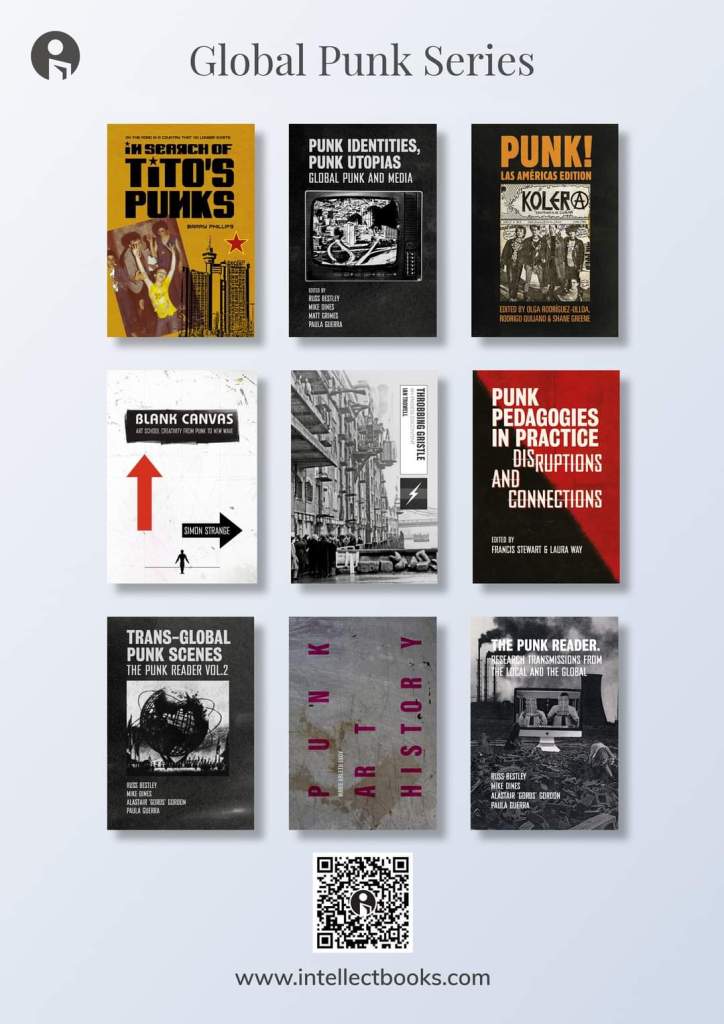
Punk Scholars Series

I love being part of this ever expanding network of wonderful books and authors

https://m.facebook.com/story.php?story_fbid=pfbid02Myvrzem5KahekuQDWwRDrR8STg9cV6J67r6rKBiPEA3ZKwKwFJ3SkB4gS3TuAmdTl&id=532403760

https://www.intellectbooks.com/blank-canvas

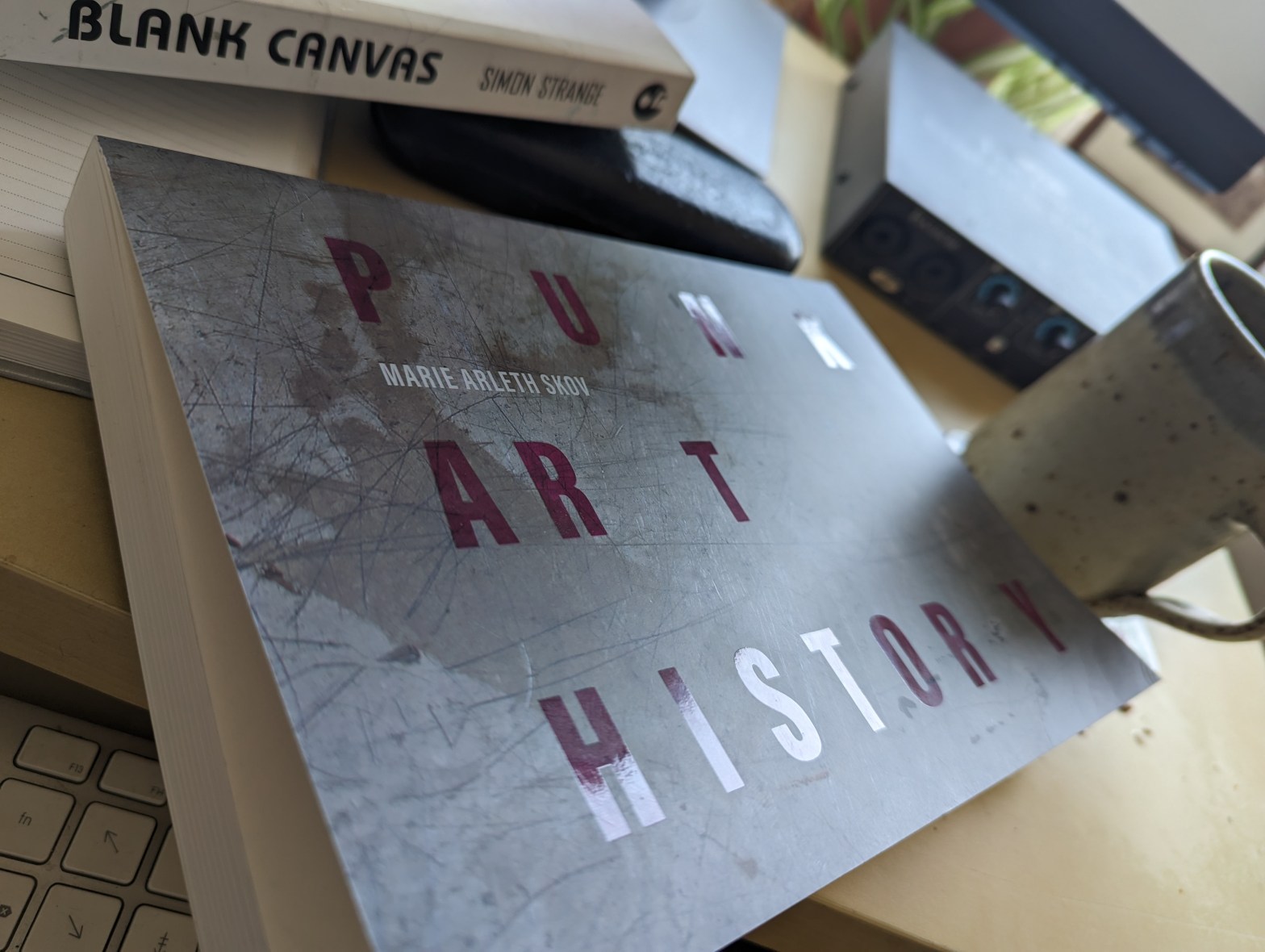
Punk Art History

I am a punk in spirit but not in music making reality. My brother was, painting half of his face blue and being a teenager in 1977.  I am naturally affiliated to post punk or new wave but the word ‘punk’ is a strong symbol, something which emphasises innovative thought and new directions, anarchic and beyond the avant-garde. Punk as a word has become much more than its music; it’s a statement of intent. Marie Arleth Skov’s gorgeous Punk Art History highlights the visual impact of this time in history, providing both an archive and forward facing view of audio and visual connections, still as relevant now. 

Part of the wonderful punk scholars Global Punk series. Increasingly beautifully designed and playing with the edges of academic and popular publishing, Intellect publishing provide the space for this DIY aesthetic to exist, which is an incredible feat in the fine margins they work within. Skov’s style of writing is accessible and playful in a way that supports the ethos of the series. 

It is another sure fire connection between the art and music worlds that inspired contemporary music through the punk baton. The book is an art piece.

Marie clearly reviews the time period of punk, centering it around those key times from 1976-78. Unlike Jon Savage, for me highlighting the Sex Pistols, the Clash and especially Genesis P-Orridge’s Coum productions feels very London centric.The connection between COUM and punk is not one that I would always make as Throbbing Gristle were often a low, slow, industrial machine. Not the speed of punk which Skov expertly highlights. More like Gong or other hippie favourites. I would look at defining punk as for me Adam and the Ants for example weren’t punk but new wave or even new romantics.

PAH beautifully reviews connections between Andy Warhol and punk, Conceptual Art, Fluxus, the Situationists and Dada. Art and Language were also another key important connection. The image comparisons between Warhol’s Elvis and Gavin Turk’s Sid Vicious for example, are informative and visually exciting.

DIY expressions through Xerox and Super 8, the copiers and filmmakers of punk are explored. Derek Jarman was an art school guest lecturer at Hornsey. The rise of MTV and video through the visualisations that punk and post punk/ new wave brought into the pop music sphere.

A second book could explore Punk Art as a personal element – fashion and dress sense through DIY and daring. It is a brilliant supporting text to Ogg and Bestley’s The Art of Punk introducing context. Punk Art History is an excellent source of punk art so it would be great to have a follow up that connected the Buzzcocks, Exploited, the Damned, Stiff Little Fingers, Sham 69 etc.. I explain in Blank Canvas how Gina Birch of the Raincoats and Dexter Dalwood of the Cortinas for example forged a continuing visual art career.

Go buy this great historical artefact direct from the publisher or from your favourite independent book seller.

My book, Blank Canvas: art school creativity from punk to new wave can be purchased here – https://www.intellectbooks.com/blank-canvas