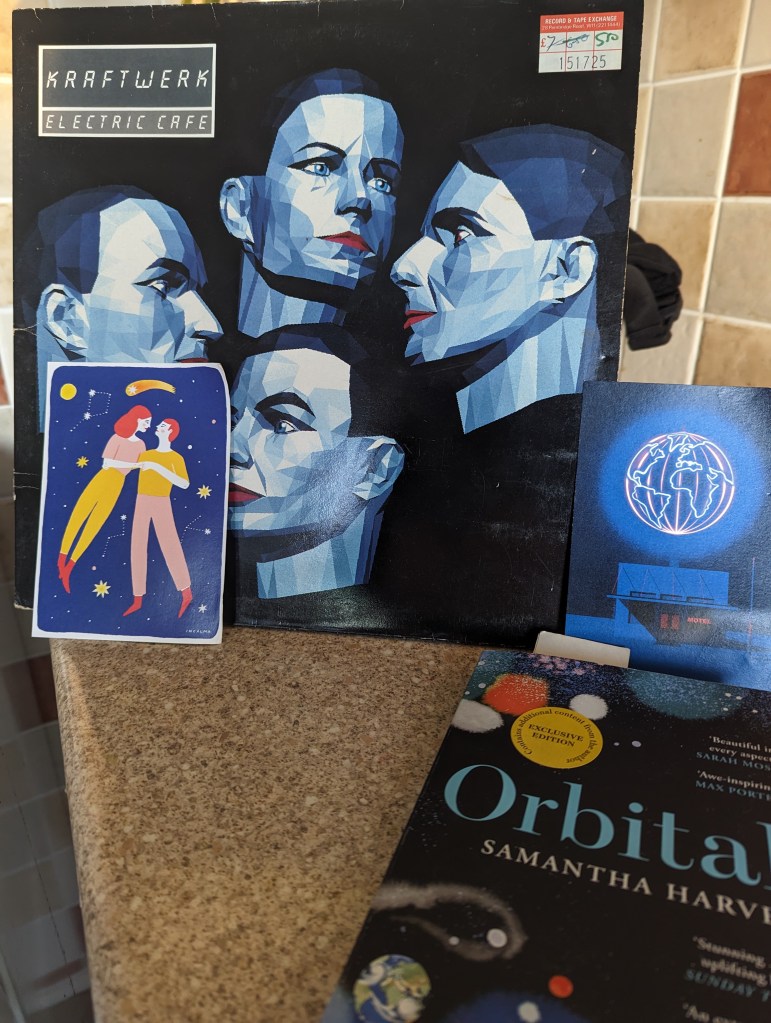
Everyone recognises their epoch as the modern world. We live in a modern world. We have always done so, back to JC (not Jeremy Corbyn) himself, announcing wow what a modern world I have created (sic). What constitutes modern? AI or AC? We seem to be constantly moving towards Tomorrow’s World, futuristic presenters Raymond Baxter or Judith Hann pronouncing new inventions which will change our lives on the BBC programme. Kraftwerk robotically striking synthesised drum pads. The computer, that most modern world invention. Everything is controlled by them, from cavernous rooms filled with metal boxes and spooled tape to small passages of text on the first desktop computer, really the IBM personal or ZX Spectrum. These devices seem even more futuristic now, more modern than when they arrived in the world. We are looking towards AI as our future, our saviour, our threat. A world where we can sit twiddling ever-expanding thumbs, surfing through an ever-increasing array of social media, yearning for a newspaper or weekly journal to plop onto the doormat. A reassuring and exciting presence, rather than a mini world, on a little screen in front of us. The modern world should be better. More nature. More free time. Greater freedom. A life worth living. Supporting the planet and actually enjoying it rather than mercilessly moving forwards, striving for the next thing. Samantha Harvey’s wonderful Booker prize winning Orbital, providing an expansive view from above, defining the gaseous layers which sweep around the little fluffy clouds of our beautiful orb.
AI has been around for ages, having a greater impact in certain areas. Music has utilised AI technology since the 1970s, through automated synthesisers, Kraftwerk on Tomorrow’s World, still looking futuristic today. AI will suddenly be implemented at pace, when everyone realises it has been there for so long, waiting in the wings for its opportunity to pounce. Early Dr Who episodes through stricken derelict London sites, Mad Max meets the time lord. Earthy. Dated. Tomorrow’s world is here today, always has been, constantly striving for the new, pushing forward in ever increasing ways that is meant to mean improvement, subtle alterations aimed at de-snagging. The present or future is not always improved. Thinking about my generation, we were lucky to have existed in a world that straddled the internet, saw rapid changes in technology but had a grounding in the analogue basics. Relate to the past but be excited about new technologies, providing a grounding so that AI isn’t let loose without contemplating the past, thinking about what will be missed, experience of technological advancement. Is there life on Mars? 1984 predicted a future before Big Brother, nasty Nick, a dystopian world which always seems to hang on a date slightly out of reach. How about 2032? That currently feels far enough away to have mystique so that the truth doesn’t need to be connected. A dream date. An impossible reality where everything is shiny and silver, silent, smooth, sensuous. The human condition of constantly looking forward whilst burying collective heads in sand about climate change. I mean the planet is always going to exist, things will be OK, global warming is a myth made up in a lab by boffins who are always proven wrong. Experts eh! The future will always be there, temptingly out of reach, tomorrow’s world ahead of today. In the blink of an eye time moves on, tempting new ideas just about in reach. AI can help unlock our lives, reduce the amount of time needed to be spent on daily chores, gathering information in seconds, the robot the research assistant of the future. Or the present really as the future has always been with us, just moments ahead. Iconic German band Kraftwerk still feel so futuristic, ahead of the game, computer dummies producing evocative minimalist music to cycle to. But there is a stark coldness to the thought of AI, not something comfy and fluffy. Images of sheet metal glistening in a bright orange glow, the ozone layer thinning daily, the end of days feeling nearer as our world becomes increasingly dystopian.