AI

Artificially intelligent. Robots taking over the world. Our lives changing forever, your life in their hands. Big brother taking control of the wheel, building the car and taking you for whatever journey they fancy. You are out of control, like Trump out for a morning stroll, spitting nonsensical rubbish out into the world, creating chaos, firing shots all over the place just to see what happens, shooting them so they just fly past ears, surface wounds. Just a few centimetres from a different world; the fallibility of humans. AI will take the strain although trains will still probably run late, be cancelled, smell of the 1970s: Comfort, sweat and piss. The perfect world built around AI will never exist. People will still be sheltering under bridges, wrapped in stinking old blankets, comforted by Blue Nun or other such fortified wine. Our computerised intelligent friends will make many jobs redundant, those menial tasks that some people probably enjoy. Fiddling around with a spreadsheet, using mental arithmetic, digging deep into school history lessons to remember dates of lesser-known wars. The Boer wars, when were they again? Time will exist to pop more regularly to the gym, to go out for midday walks whilst your bot collates every element of your business into a streamlined project management proposal. Us humans left to ponder, to be artistic, creative. So why then are multiple governments defunding the arts, when understanding our creative selves is going to be a key element of the next 100 years. By 2099 the average life span will be 150 years old, frail bodies reconstructed, minds connected to mainframes, town centres overpopulated with electric zimmer frames and silent non-polluting vehicles. Healthcare transformed, early warnings for the previously terminally ill. Street corner smokers replaced by electronic transmitters. No one dies. Graveyards get turned over to be used as spaces to house mega computers. Chips implanted into babies at birth, regulating every last internal element, checking dietary requirements from within. Providing a smart watch readout, regulating everything so that you can maximise productivity and life. Serendipity disappears. We are all under central control. Tik Tok memes a quaint remembrance from the past like grainy black and white film. Everything is sanitised. Life is perfect. More people are stacked up under the bridges, freezing, washed away by yet another deluge as ice caps melt. What is AI going to do for and to us? But what is the overall ethos? What is the point? Increased efficiency. No more potholes in the road as AI can gather this data and put repairs into action, robotic teams laying steaming tarmac whilst one human worker looks on from central control. One human worker oversees all potholes, shuffling to monthly line management meetings with his robotic boss. Lines of driverless cars waiting patiently for the green light, no horns are blared, the world is silent except for the incessant sounds of nature and the unromantic whirring of machines; a chance to make music and write poetry whilst sat in early morning traffic. Planning vacations where electric planes can silently deliver you to picture perfect locations; all is clean and sanitised now, the madness of Varanasi no longer existing, pushing past cows in the streets as bodies burn by the dirty rivers edge. No gritty industrial estates, bleak and foreboding windswept arenas. But inequalities will remain, the human desire for separation and difference. Sanitised AI worlds only existing for a few not the many. Those lucky to have been born into AI families, those fortunate Gen Z whose long line of families bought property cheaply during the 1970s and 80s. Will AI really change that much for the general population, like watching the BAFTA’s, lots of suited and booted mega stars on your screens, talking about inequalities, talking about creativity, still a load of old white men in boring evening suits congratulating other white men in equally anonymous attire. Hopefully AI can help to bring some levels of equality rather than just efficiency, provide opportunities and visibility for all. Reconfigure the workplace so that everyone’s talents are maximised, that life work balance, universal wage and true equality arrives for all.

AI generated picture of AI taking over the world

Creativity

I love the winter break, a chance to stop, get ill, listen to podcasts and read. A chance to reflect on your top 20 books, albums, events, moments of the year almost past. Former conservative MP Rory Stewart is increasingly fascinating, a life spent trying to gather all information, to walk and connect with as many people as possible. His latest podcast, The long history of Ignorance, resonates in so many ways, especially episode 3 where he talks about ignorance behind creativity, the pure space where innovative work comes from which was the core theory behind my book Blank Canvas.

Why do we create stuff? Is there some inbuilt need to innovate, solidify your place in the world by manifesting? How creative practice connects to the brain is fascinating, the need to redevelop something fresh and original. Every day I have an innate need to do something creative, engage with the playful and free part of my brain. It doesn’t have to be for a long time, just at some point my inner self finds peace finds its tranquil home through scratching the creative itch.

I sometimes forge the time to create pieces of music, hours spent slaving over a hot computer based Digital Audio Workstation (DAW), perfecting sections on my computer, listening over and over to the same section, distorting reality, a sample of a Buddhist chant or the gentle lapping of the sea. Although I don’t really have the attention span for attention to detail. I love developing the structure, creating the whole outline, building up parts but then you need to go back and alter elements of instruments, hi hat positioning, the velocity of the odd kick drum, automation across your strings pads, hone the reverb until it sounds glassily transparent, build echoes onto certain moments so that that they last just the right amount of time, don’t mask or clash but aid the flow. I love creating melodies, interlocking parts that flow off each other. Rhythm less so. I like a pulse, a beat, but I keep missing all those intricacies that make up a great drum track. Creating the music is one thing, but then what happens? In previous eras you could go to your local studio, record some live parts over the basic structure, mix, master and create an artefact. Get friends to help in creating cover images, get your vinyl from the Czech pressing plant. Burn straight to 1/4-inch tape then Digital Audio Tape (DAT). Avidly, we created packs and sent them off to our favourite DJ’s and record shops. If it was any good then it got played. Not necessarily in large amounts but there was some traction, a point to the creative process, validation and the thrill of your sounds heading off into the ether. Nowadays I am increasingly thinking about the pointlessness of sending music out into the world. It is a saturated market, flooded by accessibility. The point of releasing music is generally about the self, satisfying a personal need to let the world have your piece of art, more flotsam to spin around digital highways, polluting, blocking up the cloud. The conundrum that the top 100 albums feature regular favourites such as the Beatles, Stones, Neil Sedaka and Nana Mouskouri, charity shops the new record stores. Spotify has endless music. Everyone can get their music on the platform; the gatekeepers have been sidelined at this point. Emancipation for good and bad. Although you now need connected humans, DJ’s, label managers, to make an impact. To get plays, streams, downloads you need a record company or influencer to catch onto your track, to like it in a way that connects with their other material. Music promotion companies such as Label Radar or Groover provide this service, enticing you to pitch your music to an endless supply of record companies. It does work. Some of my tracks get taken up and then you are onto stage 2. Promoting your track. Friends and family will sometimes listen but reaching beyond is so difficult, battling the tide of artists who have also released music that day. Estimates range between 60 to 100k releases per day. Every day. Still, you turn on 6 Music and Marvin Gaye is thoughtfully crooning along. Wonderwall is still building. The Smile continue to sound like Radiohead, but without the iconic songs. The Gatekeepers have shut the door and thrown away the key for infinity and beyond. Wham! and Last Christmas the two top documentaries. Nostalgia, nostalgia. So, should you keep making music I hear you cry? Maybe there should be an amnesty, no more music until we have filtered out all which is blocking, a year of silence to contemplate, think where creativity is taking us all. A year for everyone to prepare, restart culture. To try new instruments that have never been part of your world, the true blank space of creativity. Innovation through ignorance. Musicking is personal, moving your head from thoughts of Top of the Pops and stardom to a process, going through something cathartic. You need to make the music for yourself, to get what is inside out. The pure self. Anyway, I still check my Spotify streams, have extreme pleasure when it says that someone is listening to my latest track Rise up by Inochi. In-Oh-Chee. Japanese for life energy, I think. Check it out on all streaming platforms. So maybe that is the point, personal satisfaction that someone somewhere gets it, gets you. Listens to you. Reads your words. Takes time to connect their life with yours. Or maybe it’s just a release, an internal burden which needs to be set free. Our lives are time stamped by the creativity of others, remembering different eras, innovative sounds or combinations of the audio and visual, stopping us in our tracks, providing new directions and thought processes. Picking a random book from the shelf of a library stack that alters your thinking, the ideas of others taking centre stage and manipulating your life in a certain direction. We need creativity to keep us sane, provide a reason for being. It is one of the most important elements so should be embraced fully, hugged to death, translating thoughts from your mind into actions. I am interested in bringing culture and creativity to rural locations, having moved from the city during the Covid pandemic, Stewart Lee’s sketch where he has friends who move to the countryside, to live an idyllic life but the reality is extreme boredom. They enquire to friends, please come and visit; bring coke. He has only a horse to talk to now. The buzz of the city replaced by peace and calm only works if you can have a balance. A vibrant life where the beauty and purity of nature and culture intersect. An internal smile. My research is based on exploring the infrastructure and innovative ideas you can collate which forms a rural scene or scenius, finding the people and locations, stories and place. A collective will to develop culture, a blank canvas on which anything can be drawn. No competition. If you create it they will come, bringing thoughts from everyone’s head into realisation. Collective intelligence and ignorance brought beautifully together.

This is the modern world

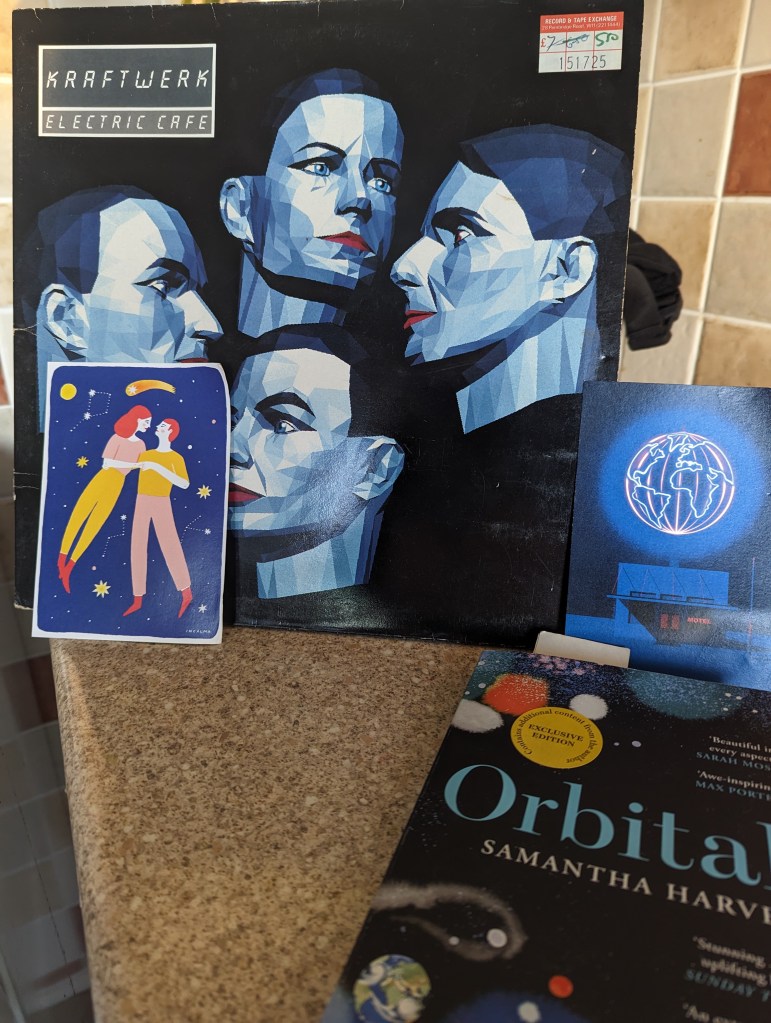
Everyone recognises their epoch as the modern world. We live in a modern world. We have always done so, back to JC (not Jeremy Corbyn) himself, announcing wow what a modern world I have created (sic). What constitutes modern? AI or AC? We seem to be constantly moving towards Tomorrow’s World, futuristic presenters Raymond Baxter or Judith Hann pronouncing new inventions which will change our lives on the BBC programme. Kraftwerk robotically striking synthesised drum pads. The computer, that most modern world invention. Everything is controlled by them, from cavernous rooms filled with metal boxes and spooled tape to small passages of text on the first desktop computer, really the IBM personal or ZX Spectrum. These devices seem even more futuristic now, more modern than when they arrived in the world. We are looking towards AI as our future, our saviour, our threat. A world where we can sit twiddling ever-expanding thumbs, surfing through an ever-increasing array of social media, yearning for a newspaper or weekly journal to plop onto the doormat. A reassuring and exciting presence, rather than a mini world, on a little screen in front of us. The modern world should be better. More nature. More free time. Greater freedom. A life worth living. Supporting the planet and actually enjoying it rather than mercilessly moving forwards, striving for the next thing. Samantha Harvey’s wonderful Booker prize winning Orbital, providing an expansive view from above, defining the gaseous layers which sweep around the little fluffy clouds of our beautiful orb.

AI has been around for ages, having a greater impact in certain areas. Music has utilised AI technology since the 1970s, through automated synthesisers, Kraftwerk on Tomorrow’s World, still looking futuristic today. AI will suddenly be implemented at pace, when everyone realises it has been there for so long, waiting in the wings for its opportunity to pounce. Early Dr Who episodes through stricken derelict London sites, Mad Max meets the time lord. Earthy. Dated. Tomorrow’s world is here today, always has been, constantly striving for the new, pushing forward in ever increasing ways that is meant to mean improvement, subtle alterations aimed at de-snagging. The present or future is not always improved. Thinking about my generation, we were lucky to have existed in a world that straddled the internet, saw rapid changes in technology but had a grounding in the analogue basics. Relate to the past but be excited about new technologies, providing a grounding so that AI isn’t let loose without contemplating the past, thinking about what will be missed, experience of technological advancement. Is there life on Mars? 1984 predicted a future before Big Brother, nasty Nick, a dystopian world which always seems to hang on a date slightly out of reach. How about 2032? That currently feels far enough away to have mystique so that the truth doesn’t need to be connected. A dream date. An impossible reality where everything is shiny and silver, silent, smooth, sensuous. The human condition of constantly looking forward whilst burying collective heads in sand about climate change. I mean the planet is always going to exist, things will be OK, global warming is a myth made up in a lab by boffins who are always proven wrong. Experts eh! The future will always be there, temptingly out of reach, tomorrow’s world ahead of today. In the blink of an eye time moves on, tempting new ideas just about in reach. AI can help unlock our lives, reduce the amount of time needed to be spent on daily chores, gathering information in seconds, the robot the research assistant of the future. Or the present really as the future has always been with us, just moments ahead. Iconic German band Kraftwerk still feel so futuristic, ahead of the game, computer dummies producing evocative minimalist music to cycle to. But there is a stark coldness to the thought of AI, not something comfy and fluffy. Images of sheet metal glistening in a bright orange glow, the ozone layer thinning daily, the end of days feeling nearer as our world becomes increasingly dystopian.

Album cover of Kraftwerk album Electric Cafe and a copy of Orbital by Samantha Harvey